

He committed war crimes with impunity
Until he was condemned to hang

‘Bomber’ Harris unleashed aerial warfare on a Continent with devastating effect without achieving the victory he promised. Yet he was not the aggressor in his war. His actions were a response to the indiscriminate bombing of British cities. The man who ‘sowed the wind’ that called forth Harris’ ‘whirlwind’ was a man who likewise promised to deliver victory through bombing alone. He too failed — and he was condemned to hang for war crimes. His story holds a warning for those who think they are above the law. Below is a short biography of Hermann Goering.
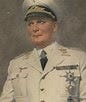
Goering commanded the German Air Force (Luftwaffe) throughout WWII. A former fighter pilot, he liked to portray himself as a “knight of the air.” By WWII, however, he was a drug addict, fat, bombastic and loved the limelight. It would be easy — but wrong — to dismiss him as a clown or a fat buffoon. Yet he was far more dangerous, sinister and complex than such a portrayal suggests.
Goering was born into the ruling elite and raised in a castle belonging to his mother’s Jewish lover. He was commissioned in the German Army at the age of 19, two years before the start of WWI. During the war, he transferred to the fledgling air force and as a fighter pilot had twenty-two credited victories. He was awarded the “Pour le Merite” or “Blue Max,” then the highest German medal for bravery. He took over command of Manfred von Richthofen’s famous fighter wing after Richthofen’s death in July 1918.
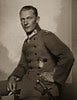
Goering could not come to terms with Germany’s defeat and went into voluntary exile in Sweden, where his good looks and daring flying won him admirers and social success -- including captivating the wealthy (and married) Swedish baroness, Carin von Rosen. Their affair scandalised the Swedes, and they fled to Bavaria, where — after Carin divorced her first husband — they married in 1923.
Meanwhile, Goering had met and become mesmerised by Hitler, whom he met in 1922. Despite the differences of class and personality, the bond between the two men was to hold almost to the last day of Hitler’s life. Despite his later failings, Goering always retained a place of privilege in Hitler’s inner circle that neither Goebbels nor Himmler could displace.
Goering earned that place with his early dedication, sacrifices and effectiveness. Goering took over the Sturm Abteilung (SA) -- Hitler’s thugs -- and turned them into a (comparatively) disciplined troop capable of much more effective disruption, brutality and intimidation. Despite his best efforts, however, the SA did not prove a match for the Bavarian police, and Goering was wounded in the groin during the abortive “Beer Hall Putsch” of 1923.
Following this debacle, he had to surrender command of the SA to Ernst Roehm. Furthermore, while treating his wounds, he became addicted to morphine—a dependency that triggered volatile mood swings, rapid weight gain, and took him to the brink of ruin. He was twice institutionalised in Sweden, and meanwhile, he and his wife bankrupted themselves with donations to the Nazi Party.
In May 1928, he was one of only 12 men elected to the Reichstag on the Nazi Party slate. This provided not only a salary, but respectability and a platform from which to work. He proved to be a gifted fund-raiser and recruiter, equally at ease in upper-class cocktail parties or out haranguing workers and farmers. By September 1930, the Nazi Party had increased its seats in the Reichstag to 107. Two years later, it was 230 -- and Goering was the President of the Reichstag (equivalent to the Speaker of the House in the US).
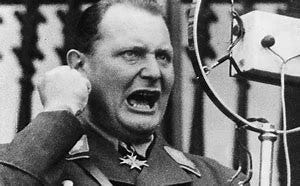
Goering used his position to systematically undermine democracy, something he managed in part because of his good relationship with the increasingly senile Paul von Hindenburg, the official Head of State or Reichspraesident. When Hitler, as the leader of the largest faction in the Reichstag, was appointed Reichschancellor, Goering was appointed Minister of the Interior in Prussia, a position he used to establish the Gestapo and the first concentration camps. He may also have played a role in orchestrating the Reichstag fire that became the pretext for Hitler demanding -- and receiving -- dictatorial powers.
In the first years of the Nazi regime, Goering was Hitler’s unquestioned “right-hand-man” and his bulwark. In addition to using the Gestapo and Concentration Camps to purge the country of opposition leaders, independent journalists and other democratic elements, he used threats and bribery to bludgeon and seduce support from Germany’s industrial elite. In 1934, he took his revenge on Roehm for replacing him as head of the SA by masterminding the slaughter of the SA leadership during the completely fabricated “Roehm Putsch” -- an orgy of murder against some of the Nazi party’s most loyal (and brutal) supporters. (Read about this at: https://hpschrader.substack.com/p/night-of-the-long-knives-political-alliances-warning)
Goering surrendered control of the security apparatus to Himmler in the aftermath of this purge, but in 1936, he was entrusted with ramping up Germany’s synthetic oil and rubber production. He was so successful that Hitler appointed him Minister of Economics in 1937. He used this position not only to build autobahns, ramp up steel production, improve harvests and reduce unemployment, but to build up armaments, stockpile munitions and other war materiel -- and to enrich himself.
His appetite for luxury and display, including fine art, fine wine and fine food, was insatiable. He designed ever more flamboyant uniforms for himself, built a huge hunting lodge, maintained dozens of personal cars, traveled in a personal armed train with a hospital car (among other things). He wore rings on every finger, and when he remarried in 1935 (his beloved wife Carin had died of a heart attack in 1931, aged only 38), he had a wedding parade with 30,000 soldiers.
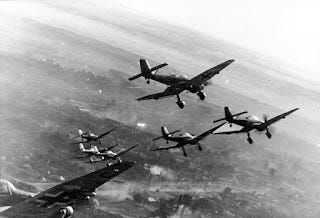
All the while, he was head of Germany’s civil aviation and the secret Luftwaffe, which came out of hiding in 1935. Goering attracted highly competent men to this new and prestigious organisation, men like Walter Wever, Hans Jeshonnek, Ernst Udet and Erhard Milch. The Luftwaffe also enjoyed priority in recruitment and huge budgets. It grew rapidly and benefited from a sophisticated German aeronautics industry. The Spanish Civil War provided an excellent testing ground for men and machines before the outbreak of WWII. Among other things, it demonstrated that the Stuka dive bomber (shown below) could be a highly successful ground support and terror weapon.
The Luftwaffe, whose machines and tactics had largely been devised for close combat support roles, was instrumental in Germany’s victories over Poland and France. These successes, combined with Goering’s inflated sense of self-worth, led him to promise Hitler that the Luftwaffe would destroy the British Expeditionary Force at Dunkirk and — when that didn’t happen — that it would force Britain to surrender in a matter of weeks.
Yet Goering had never been more than a squadron leader. He had never gone to staff college, much less served in a staff position. He had no first-hand experience with modern aircraft and no understanding of modern fighter tactics. His interference in the direction of the Battle of Britain was counterproductive — including backing Kesselring’s demands to attack London.
Admittedly, Goering probably targeted London for political rather than tactical reasons -- or simply to bolster his own image, which had been tarnished by RAF attacks on Berlin and other German cities. He was also undoubtedly motivated by the need to regain favour with Hitler, who wanted revenge for the attacks on Germany. Whatever his reasons, the targeting of London took the pressure off Fighter Command’s airfields and enabled the RAF to withstand the attacks long enough to force a postponement of the invasion.
After this defeat, the Luftwaffe never regained its mastery -- despite such brilliant technical advances as the FW190 (that for nearly a year out-classed all Allied fighters) or even the ME262, the first jet fighter that saw operational service, which was yet more superior than anything the Allies had at the time. Technical genius could not make good the steady attrition in machines, men and morale that set in on the Western Front.
Success in the East was also ephemeral. Despite much higher kill-to-loss ratios, the sheer size of the task and the weather eventually took its toll. Goering, meanwhile, remained out of touch with reality and vastly overestimated his own and the Luftwaffe’s capabilities. Among other errors, he promised to supply the Sixth Army, trapped at Stalingrad, entirely by air. It couldn’t be done. Goering -- and the Luftwaffe -- “failed” again.
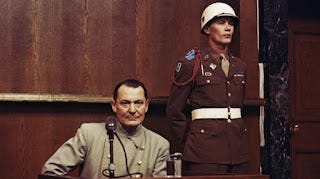
Goering played only a nominal role in the waning years of the Third Reich, but that did not prevent him from being tried at Nuremberg and condemned to death. His sentence was earned many times over. He had been ruthless, undemocratic, and corrupt ever since the Nazis came to power. He was personally responsible for a variety of crimes from the establishment of the Gestapo and the early concentration camps to the murder of hundreds in the purge of 1934. Goering took his own life rather than face being hanged like a common criminal on 15 October 1946.
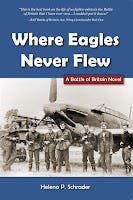
Although Goering has only a “cameo” role in “Where Eagles Never Flew,” I attempt to depict him accurately as well as indicate the impact of his leadership style on his subordinates. “Where Eagles Never Flew” was the the winner of a Hemingway Award for 20th Century Wartime Fiction and a Maincrest Media Award for Military Fiction.
See a video teaser at:
This is an interesting read and such a complex time full of characters worth learning about. So much stems from the way World War 1 concluded. The Russian revolution wreaked havoc and it played a role in Germany's defeat in WW1. Bolsheviks undermined the German war effort and it caused great resentment when the war ended. There was fighting in the streets to see who would control Berlin. As we know, the WW1 treaty terms were very harsh. It all created a cauldron that bubbled up and guys like Goering took power, defeating factions like the Bolsheviks.