

Stopping Aggression without War
Lessons Learned from the Berlin Airlift

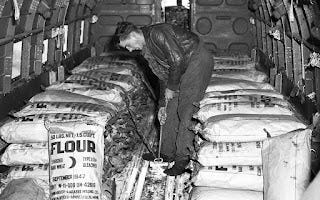
Seventy-eight years ago today, the United States of America responded to Soviet blackmail — a modern siege cutting 2.2 million civilians living in the Western Sectors of Berlin from all necessities of life — with an innovative and peaceful counter-measure: an Airlift. For nearly eleven months, the US, supported vigorously by Great Britain, flew food, medicine, coal, clothes and everything else into the besieged Western Sectors of Berlin. There were critical periods when the Berlin Airlift came close to collapsing, and there were moments when Allied resolve wavered. Yet in the end, the Berlin Airlift succeeded beyond the wildest hopes of its initiators.
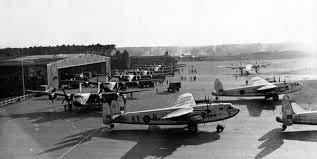
The Berlin Airlift remains to this day the largest and most successful airlift in history. All subsequent airlifts together carried less than the Berlin Airlift did alone. During the Soviet Blockade, the Allies together flew in 1,613,119 tons of supplies into the city and 35,843 tons of industrial goods produced in Blockaded Berlin out. Those goods were carried in 277,569 sorties, covering 124 million miles. Furthermore, the revolutionary and innovative changes introduced into the complex air traffic control system became the basis for modern air traffic control around the world for the next half-century.
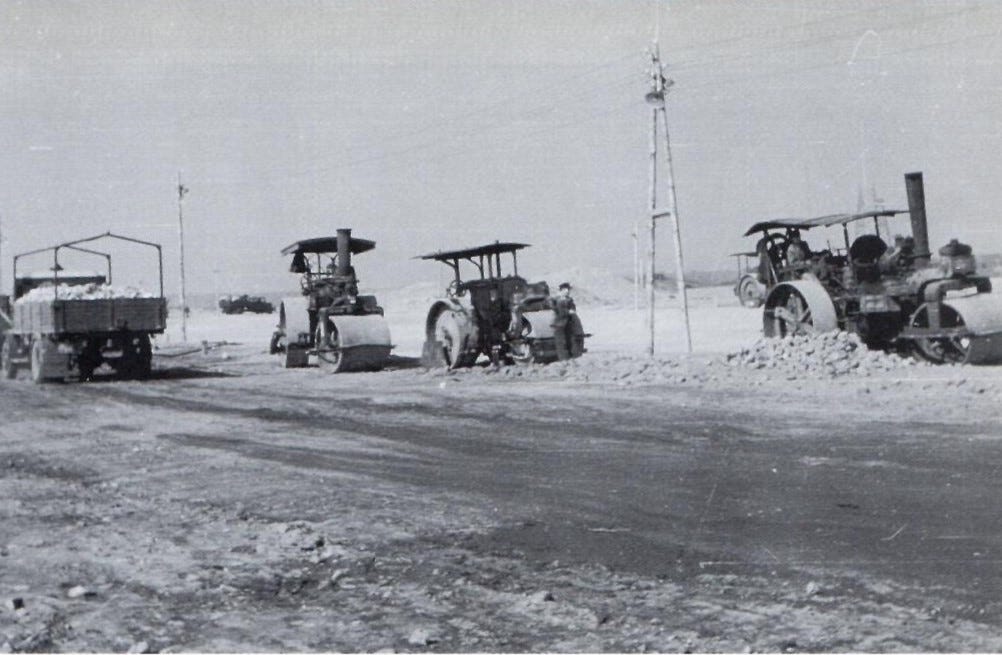
At the start of the Airlift, there were only two major airports in West Berlin, two in the American Zone and one in the British Zone. At the end of the Airlift, there were three major airports in West Berlin and six in the British Zone as well as the two still in the American Zone. The airport in Berlin, Tegel, was constructed of rubble from the ruined city by Berliners (predominantly women) working with construction equipment that had been cut up into pieces small enough to fit into the cargo compartment of small, propeller aircraft, then flown into the city and welded back together again. Yet perhaps the most astonishing and unique accomplishment was the construction of a modern power plant using materials that likewise had to be transported in pieces on small, propeller aircraft.
Yet impressive as the logistical achievements of the Berlin Airlift were, they were only the byproduct, not the objective, of the entire operation. The Berlin Airlift was first and foremost a political rather than a military operation. Inevitably, perceptions of it have changed over time in accordance with the political situation in Europe.
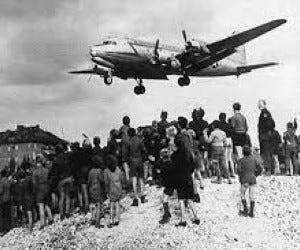
In the immediate aftermath of the Airlift, as the U.S. and the Soviet Union confronted one another more and more openly around the globe, the Airlift was seen primarily as a Western Victory in the Cold War. The ideological fault-line now clearly ran through the heart of Germany, and Berlin had become an outpost of “Freedom” in a totalitarian sea. The Radio Station RIAS, “a Free Voice of the Free World,” seemed to embody this spirit for decades to come.
The decade and a half following the end of the Airlift also witnessed reconciliation between France and Germany and the integration of West Germany into West European military and economic frameworks. The Airlift was increasingly perceived as catalyst for the transformation of the former German enemy into a European alliance partner.
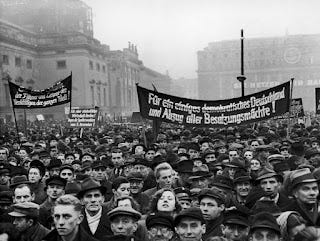
But as a new generation came to maturity in the late 1960s, the Vietnam War tarnished America’s image as the defender of justice and freedom. Focus shifted to the negative aspects of the Airlift. It was seen as the cause of the—then apparently irrevocable—division of Germany. People noted that not only had enemies been turned into allies, but brothers had been turned into enemies.
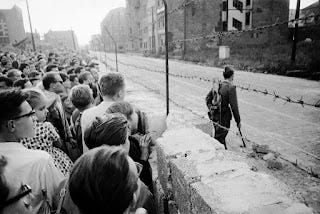
The Wall that by then ran through and surrounded Berlin was deadly and cruel. Voices were raised that argued: Well, yes, the Airlift seemed like a good thing at the time, but are we sure there wasn’t another way? Is it really better to be dead than Red? Indeed, is Real Existing Socialism all that bad? After all, East Germany has Day Care and Equality between the Sexes, and only the Americans have ever used an Atomic bomb….
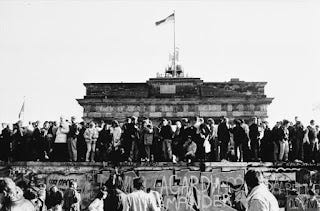
Then the Wall came down in 1989, and a peaceful rebellion in East Germany led to German Reunification. The Airlift abruptly regained its significance and acquired new appeal. The 50th Anniversary of the Airlift was celebrated in the knowledge that the Berlin Airlift had played a critical role in keeping the U.S. engaged in Europe. Rather than being a contributor to the division of Germany, the Airlift was credited with enabling a sovereign, independent and democratic Germany capable of playing an independent role in international politics.
Today, nearly eighty years after the end of the Airlift, a generation is reaching maturity that cannot remember the Division of Germany and knows of the Soviet Union only from history books. The end of the Cold War has reduced the significance of the Berlin Airlift, and public attention is focused on new enemies and new wars. Tragically, the United States has turned against NATO and Europe to pursue patently imperialistic and aggressive goals. Memories of a better America are almost embarrassing -- to all parties.
Yet there are still “Lessons Learned” that we can learn from the Airlift, lessons that should not be overlooked in our haste to turn our attention and resources to new battles. The Berlin Airlift was first and foremost a means of resisting aggression without war. Although the Airlift was peaceful, it was forceful and entailed NOT giving in to pressure. It entailed a determined and dramatic dedication of resources – regardless of the cost — to a cause worth fighting for.
The Airlift was, furthermore, a successful collaborative effort between Allies, in which each partner brought special skills and made a unique contribution. The Americans handled the coal; the British the awkward, bulky or exceptional cargoes. The Americans flew the bulk of the tonnage in, but the British carried the lion’s share of the goods and people out. All participants report that British and Americans worked well together, respected and – if one excludes the food at RAF stations — enjoyed working together.
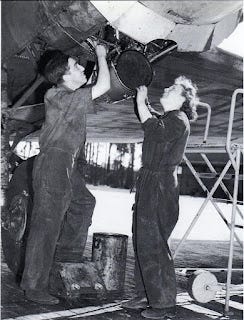
Yet perhaps the most significant achievement of the Airlift was the inspiring example it set of transforming a spontaneous and improvised stopgap measure into a highly efficient and almost painfully precise operation. From Air Commodore Waite with his rough calculations to Lt. Halvorsen with his handkerchief parachutes for chocolate bars, the Airlift owes much of its success to the initiatives of subordinates, overcoming the scepticism of their superiors.
Also notable is that much of what made the Airlift succeed was experimental—whether it was straight-in approaches and one-way traffic, streams of aircraft flying in blocks, or crushing rubble and re-melting pavement to build runways. Tunner might have been the world’s leading expert in aviation transport at the time, but he was always prowling around and asking his subordinates for suggestions on how to make things better.
The Airlift wasn’t a General Staff Plan executed perfectly like the German offensive against the West in 1940. It was a spontaneous response to a crisis in which everyone involved was willing to give their best because the mission was embraced at all levels. From the Berliners preferring “Pom” in the West to fresh potatoes in the East to the cooks keeping the Messes open 24 hours a day, it was very much the ordinary men and women involved in the Berlin Airlift who ensured its success.
In times like these, when it is easy to feel helpless, it’s important to remember that everyone can make a contribution to history — we just have to look for a way.
The Berlin Airlift is the subject of Bridge to Tomorrow, a trilogy of novels starting with Cold Peace.
Watch a video teaser here: Winning a War with Milk, Coal and Chocolate
The first battle of the Cold War is about to begin....
In the ruins of Hitler’s capital, former RAF officers, a woman pilot, and the victim of Russian brutality form an air ambulance company. But the West is on a collision course with Stalin’s aggression and Berlin is about to become a flashpoint. World War Three is only a misstep away.
Berlin is under siege. More than two million civilians must be supplied by air -- or surrender to Stalin’s oppression. USAF Captain J.B. Baronowsky and RAF Flight Lieutenant Kit Moran once risked their lives to drop high explosives on Berlin. They are about to deliver milk, flour and children’s shoes instead. Meanwhile, two women pilots are flying an air ambulance that carries malnourished and abandoned children to freedom in the West. Until General Winter deploys on the side of Russia.
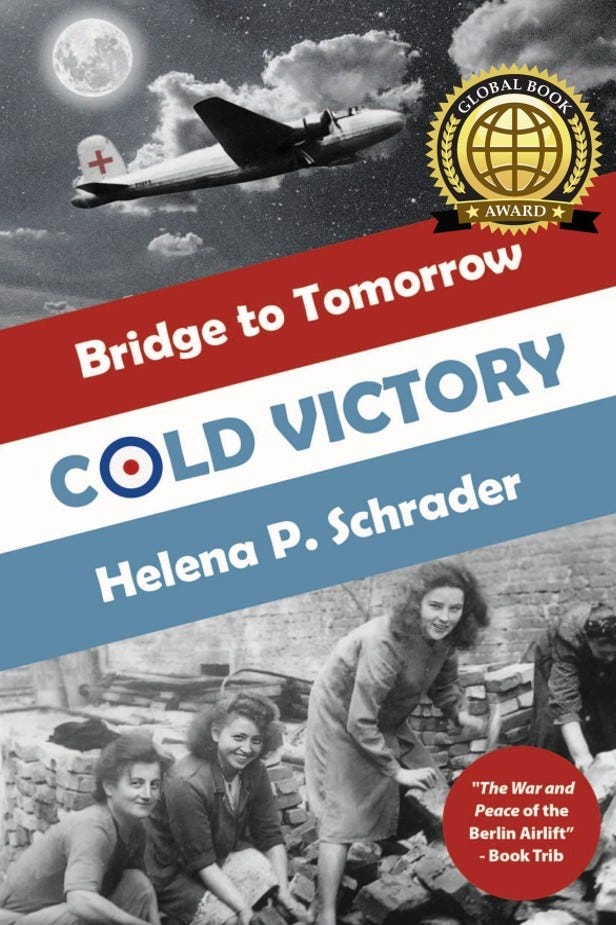
You know you’re winning when the enemy turns to dirty tricks….
As the Allies desperately fight to keep the city alive against a relentless Soviet blockade, the Soviets turn to dirty tricks that don’t stop short of murder. Meanwhile, former Nazis have regained control of the judiciary. When a young woman, a victim of gang-rape, is charged with murder, her trial becomes a cause célèbre. A high-stakes legal drama unfolds against a backdrop of escalating Cold War tensions.
I loved this trilogy and learned so much. It’s a page turner as well as an impeccably researched historical series of novels.